
When homeowners in Northeast Ohio start looking for a place to store their tools, gear, or outdoor equipment, they often run into the same two search results — “storage sheds” and “storage houses.” The websites look similar. The photos look similar. Sometimes the exact same building shows up under both terms.
So which one do you actually need? And is there a real difference between them, or is it just different words for the same thing?
The short answer is mostly the second one. Here’s a clearer look at how the terminology works and when it actually matters.
“Storage house” and “storage shed” are typically used to describe the same type of outdoor structure — a stand-alone, one-story building designed to hold tools, equipment, seasonal items, or hobby gear. Which term someone uses often comes down to region, personal preference, or how formal the building looks.
In most cases, if you’re shopping for one, you’re shopping for both.
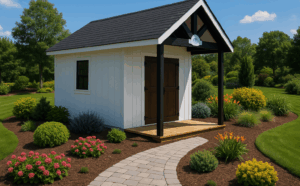
The phrase “storage house” tends to come up when someone pictures a structure that feels more residential—something with a peaked roof, real windows, siding that matches a home, and maybe even a small porch. It’s still a functional storage building, but with enough architectural detail to look like it belongs on the property alongside the home.
Some homeowners also use “storage house” as a slightly more formal way to describe a shed, the same way “guest house” reads differently than “guest room.”
“Storage shed” is the more common everyday term. When most homeowners say “shed,” they picture a standalone building used to store lawn equipment, tools, bikes, or seasonal gear. Sheds range from small, no-frills structures to fully customized buildings with dormers, lofts, and detailed exteriors.
In practice, most storage sheds are storage houses. The term you use depends more on how you talk about the building than how it’s actually built.
At Pine Craft, we regularly hear both terms from customers describing the same project. One homeowner might say “I need a storage house for the backyard,” and another might say “I need a storage shed for the same reason,” and both are describing the same category of structure.
The overlap makes sense because the buildings themselves overlap. Most modern storage sheds are built with the same durable materials, roof styles, and finishing options as a home, especially when the shed is designed to complement a residential property rather than tucked out of sight.
There are a few situations where one term feels more accurate than the other.
“Storage house” often fits better when:
“Storage shed” often fits better when:
But even in these cases, both terms are widely understood and accepted.
Whichever term you use, our approach is the same. We design and build every structure to match how you plan to use it, where it will sit on your property, and how you want it to look.
That means:
Whether you call it a storage house, a storage shed, a storage barn, or something else entirely, our team can help you plan a structure that fits.
In most cases, yes. Both terms describe the same category of outdoor building. Which one someone uses often reflects how the building looks (more residential = “storage house”) or simple personal preference.
Yes. Pine Craft storage buildings can be customized with details like windows, dormers, shutters, siding, paint, and roofing options that complement your home’s style.
Pine Craft offers storage buildings in a wide range of sizes, from small 8×8 buildings up to 16×24 for larger storage needs. Custom sizes are also available.
Most Northeast Ohio homeowners do need a permit for a shed or storage building. The process is generally straightforward, and Pine Craft can either guide you through it or handle it for you.
Not necessarily. Pricing comes down to the size, materials, and customization options you choose, not the term used to describe the building.
Whether you’re picturing a residential-style storage house that complements your home, a practical storage shed for the backyard, or something in between, our team can help you shape the design. Reach out and let’s talk through your options.